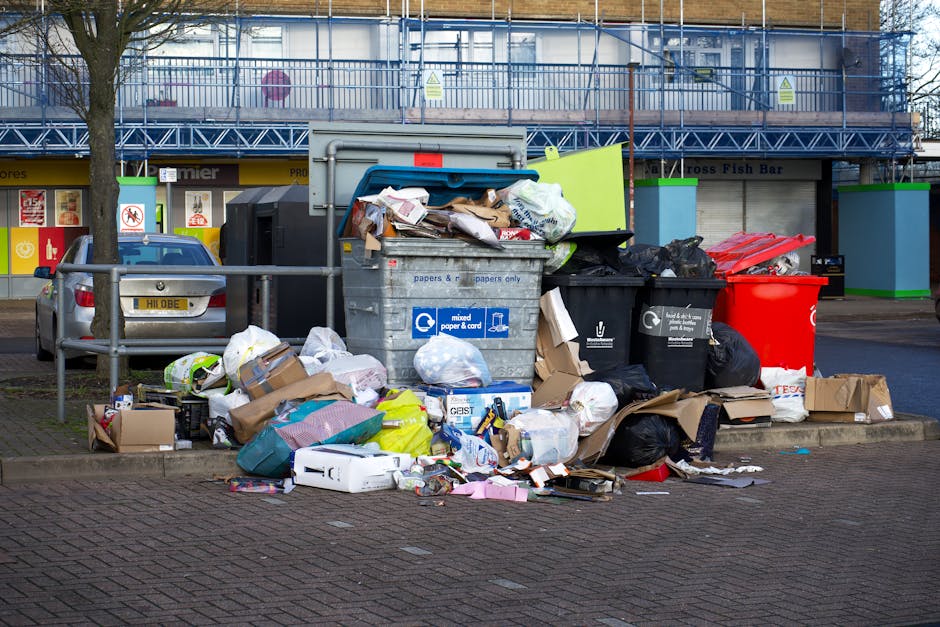
Instant quotes for Brixton rubbish removal - compare prices
If you need rubbish gone quickly, you usually want two things: a fair price and no faffing about. That is exactly why Instant quotes for Brixton rubbish removal - compare prices has become such a common search. Whether you are clearing a flat off Brixton Road, emptying a loft after years of "I'll deal with that later," or shifting old office furniture, the goal is simple: understand what you'll pay before anyone turns up.
This guide walks you through how instant quotes work, what affects the final price, how to compare offers properly, and where people most often get caught out. It also covers practical steps, legal basics, and a few real-world tips that can save you money and stress. To be fair, rubbish removal sounds straightforward until the quotes arrive and all the wording starts doing gymnastics. We'll keep it plain English.
Table of Contents
- Why instant quotes and price comparison matter
- How instant quotes for Brixton rubbish removal work
- Key benefits and practical advantages
- Who this is for and when it makes sense
- Step-by-step guidance
- Expert tips for better results
- Common mistakes to avoid
- Tools, resources and recommendations
- Law, compliance and best practice
- Options, methods and comparison table
- Case study or real-world example
- Practical checklist
- Conclusion
- Frequently asked questions
Why Instant quotes for Brixton rubbish removal - compare prices Matters
Rubbish removal pricing is rarely one-size-fits-all. A sofa, a few bin bags, a broken wardrobe, and a pile of DIY offcuts all take up different space, need different handling, and may carry different disposal costs. If you request a quote without comparing properly, you can end up overpaying for a small job or, just as annoying, choosing a cheap quote that grows once the crew is outside your door.
In Brixton, where homes and businesses often deal with limited access, narrow stairwells, shared entrances, and parking headaches, pricing can shift depending on how easy it is to load items. That makes instant quotes useful, but only if you know how to read them. A quick estimate should help you decide, not confuse you. And if the quote is vague? That is usually a sign to slow down.
Price comparison matters because it helps you separate three things: the base collection price, what is included in the service, and what may be added later. Those little differences can add up. One provider may include labour, loading, and disposal in a single fee. Another might headline a lower number, then add charges for stairs, heavy items, or waiting time. Same job, very different final bill.
There is also a trust angle. A clear quote suggests the company knows its process and values transparency. That matters, especially when you are dealing with a stressful clear-out after a move, renovation, or family change. Nobody needs surprises on top of the mess.
Practical takeaway: the best quote is not always the cheapest. It is the one that clearly tells you what will happen, what it costs, and what might change the price.
How Instant quotes for Brixton rubbish removal - compare prices Works
Instant quoting usually starts with a short form, a phone call, or a messaging prompt asking for basic details about the waste. The more accurate the information, the more accurate the quote. You might be asked about item type, estimated volume, floor level, access, parking, and whether the waste is already bagged or still scattered around a room. Nothing fancy. Just the facts.
Some providers will give a fast estimate based on photos. That can be helpful for mixed waste, furniture, or awkward rooms where volume is hard to judge. A few well-lit pictures of the items, plus an honest description, often beat a guess. If you say "just a small amount" but there is actually a room full of stuff, the quote may be less useful than a coin toss. Slight exaggeration, but you get the point.
Once you have a quote, compare more than the headline number. Check what the quote covers:
- loading and labour
- disposal and transport
- heavy lifting from upper floors
- recycling or sorting
- any minimum charge
- extra fees for difficult access
The best companies tend to be specific. They'll tell you whether the price is fixed, estimated, or subject to inspection. That wording matters. A fixed price means less risk of drift. An estimate may still be perfectly fair, but it should be explained clearly.
If you are planning a larger clear-out, it can also help to compare service pages for the type of job you need. For example, a household clear-out may be better understood through house clearance or home clearance, while a business site might be better matched to office clearance or business waste removal. That context helps you compare like with like.
Key Benefits and Practical Advantages
The biggest benefit is speed. You can move from "I need this gone" to a usable price very quickly. That is especially handy if you are juggling a move-out deadline, landlord inspection, renovation timetable, or a business handover. The room can look calmer almost immediately once the quote is in hand. Weirdly reassuring, really.
Another advantage is budgeting. When you can compare quotes side by side, you get a much better sense of what the job should cost. That means fewer awkward decisions later and less temptation to delay the clear-out because the price feels uncertain. For households and small businesses alike, certainty has a value of its own.
There is also the convenience factor. A good instant quote process saves back-and-forth. Instead of endless messages and guesswork, you provide enough detail once, get a response, and make a decision. Simple. Not always glamorous, but very useful.
Other practical advantages include:
- Better comparison: you can benchmark one provider against another quickly.
- Fewer surprises: clear quotes reduce the chance of add-on charges.
- Faster scheduling: useful when you need same-day or next-day help.
- More control: you choose the service level that fits your budget and timeline.
For customers who care about what happens to the waste after collection, it can be worth looking at the provider's approach to sorting, recycling, and responsible handling. A page like recycling and sustainability gives you a better feel for how material is managed after pickup. That is not just a nice extra; it can influence who you feel comfortable hiring.
Who This Is For and When It Makes Sense
Instant quotes are useful for almost anyone with waste to remove, but they are especially helpful in a few situations. If you are moving, time becomes the main problem. If you are renovating, the problem is often volume and disruption. If you are clearing a family property, emotion can make everything take twice as long. A quick quote helps move things along without turning the day into a project you dread.
This approach makes particular sense for:
- flat owners and tenants clearing out unwanted items
- landlords between tenancies
- homeowners tackling lofts, garages, or gardens
- small businesses with old stock or office furniture
- builders dealing with leftover rubble, timber, and packaging
- people disposing of bulky items they cannot take to a local tip easily
If you live in a flat, a prompt quote is especially handy because access issues can affect cost more than people expect. A third-floor walk-up with no lift is very different from a ground-floor collection. The same goes for bulky items like wardrobes, mattresses, or broken desks. A quote built on real access details is much more reliable.
For more specialised jobs, it helps to use the closest service category. A few examples: flat clearance for apartments and compact properties, garage clearance for stored clutter and old tools, or garden clearance for green waste and outdoor debris. The service fit affects the quote, so matching the job to the right page is worth doing.
Step-by-Step Guidance
- List what needs removing. Be specific. "Two sofas, a coffee table, three black bags, and one broken shelf" is better than "a bit of rubbish."
- Estimate the volume honestly. Think in relation to a car boot, a small van load, or part-load. Do not panic if you are unsure; just describe the pile clearly.
- Check access details. Mention stairs, lifts, distance from parking, narrow hallways, or controlled entry. These things matter more than people think.
- Request the quote. Use the provider's pricing process and ask whether the figure is fixed or estimated.
- Compare the inclusions. A lower number is not a real bargain if it excludes labour or disposal.
- Ask about timing. Same-day pickup, weekend slots, or early-morning collections may be useful if you are on a tight deadline.
- Confirm any special items. Fridges, mattresses, electricals, or heavy builders' waste may need different handling.
- Book only when the terms make sense. A clear quote plus clear terms is the sweet spot.
A small tip that saves hassle: take photos from a few angles. One wide shot is useful, but a couple of close-ups help show weight, awkward shapes, and how the items are stacked. It is boring admin, yes, but it makes quoting cleaner and faster.
Expert Tips for Better Results
Tip 1: Separate items by type before requesting a quote. Mixed waste can be harder to price because it may include furniture, light waste, and heavier material. If you split the pile into categories, the quote is usually more accurate.
Tip 2: Mention anything that may slow the team down. Locked gates, parking restrictions, broken lifts, steep staircases, or awkward shared entrances can all affect the job. Not every provider charges for these, but the ones that do will usually say so upfront.
Tip 3: Ask what happens if the load is smaller or larger than expected. This is a good trust question. It tells you whether the company adjusts fairly or uses surprise charges. You want clarity before the van arrives, not a debate in the doorway.
Tip 4: Read the quote in plain English terms. If it says "subject to survey," "from price," or "estimated load," understand what that means. None of those phrases are bad on their own. They just need context.
Tip 5: Keep the site tidy if you can. Even a small amount of sorting can help. Bagging loose waste and moving items into one area can reduce loading time and make the collection feel smoother. There is a real difference between a neat pile and a room that looks like a wind tunnel went through it.
Also, if you are using the service for an office, business premises, or a mixed-use property, it is sensible to review the provider's broader support pages such as office clearance and business waste removal. That gives you a better sense of whether they are set up for commercial work, not just household pickups.
Common Mistakes to Avoid
The most common mistake is chasing the cheapest headline price without checking what it includes. A tiny saving is not worth it if the final bill balloons once the team starts loading. You will notice this more often with jobs that involve stairs, heavy furniture, or irregular access.
Another mistake is under-describing the waste. If you leave out a bulky item or forget to mention builder's rubble, the quote may look attractive at first and then fall apart later. Truth be told, accurate information almost always saves money in the long run.
Other common slips include:
- not stating whether items are inside the property or curbside
- forgetting about restricted parking or congestion around the property
- assuming all waste types cost the same to remove
- failing to ask whether recycling is included in the service approach
- booking before checking the company's terms and cancellation policy
It is also easy to forget that some jobs fall into a separate category. Builders' debris, for example, may be better quoted under builders waste clearance. Similarly, garden cuttings, soil, and outdoor rubbish may be more suited to garden clearance. Matching the job type properly can make the quote much more sensible.
Tools, Resources and Recommendations
You do not need complicated tools to get a solid rubbish removal quote. A phone camera, a rough item list, and a bit of honesty are usually enough. Still, a few practical resources make the process smoother.
- Photo notes: take wide shots and one or two close-ups of heavier items.
- Simple checklist: write down item counts, access issues, and any time pressure.
- Measurements: rough dimensions help with large wardrobes, beds, desks, or appliances.
- Payment readiness: know what method you are comfortable using and check the provider's payment information.
If your clear-out involves valuable furniture, it can help to review both furniture clearance and furniture disposal. Some items are straightforward to remove, while others may need more careful handling depending on condition, weight, or resale potential. A decent provider should explain the difference plainly.
It can also be worth looking at the company itself. The about us page can help you judge whether the business feels established, local, and easy to work with. Not everyone checks that, but it is a fair habit. A quote is one thing; the people behind it matter too.
Law, Compliance, Standards, or Best Practice
For rubbish removal in the UK, the main thing is responsible handling. You should expect waste to be collected and disposed of in a lawful way, with attention to sorting, transport, and recycling where appropriate. Businesses and households both benefit from choosing providers that take compliance seriously, even if the details are not always visible from the outside.
If you are a business customer, there may be extra expectations around record-keeping, timing, and site safety. Staff areas, reception spaces, and offices need a tidy handover. This is where clear service descriptions matter, which is why pages such as business waste removal and office clearance are useful reference points when comparing options.
For any collection, good practice includes:
- clear communication about waste type and volume
- safe lifting and loading procedures
- careful handling of sharp, heavy, or awkward items
- basic respect for shared spaces, neighbours, and access routes
- transparent pricing and terms
If you are ever unsure whether an item is acceptable or needs special handling, ask before booking. That is not being difficult. It is sensible. And it helps the team arrive prepared instead of improvising at the kerb.
Options, Methods, or Comparison Table
There are a few ways to get rubbish removed in Brixton, and each has its own strengths. The right choice depends on the amount of waste, urgency, access, and how much work you want to do yourself.
| Method | Best for | Pros | Trade-offs |
|---|---|---|---|
| Instant quote and collection | Fast clear-outs, bulky waste, mixed loads | Quick pricing, convenient, minimal effort | Quote accuracy depends on your details |
| Pre-booked site visit | Larger or more complex jobs | More precise pricing, better for awkward access | Takes longer to arrange |
| Self-haul | Small amounts and flexible schedules | Can be cheaper in direct cash terms | Time, transport, loading, and effort are on you |
| Specialist clearance | Homes, offices, lofts, garages, gardens | Tailored approach and better handling of specific waste | May not suit tiny one-off loads |
If you want a more tailored service, it often pays to compare the specialist page that best matches your situation. A loft full of old boxes is not the same as a damp garden corner, and a builder's skip bag problem is not the same as a single sofa. Obvious in theory, but easy to forget in practice.
Case Study or Real-World Example
Imagine a Brixton resident clearing a first-floor flat after a move. There are two wardrobes, a broken bed frame, several bags of clothes, and a few bits of general clutter from under the stairs. The resident wants the job done before keys are handed back. They request instant quotes from a couple of providers, send photos, and mention stairs but no lift, plus a parking spot that is a little tight but manageable.
One quote comes back low but vague. It lists a starting price, then says the final figure depends on access and load weight. Another is slightly higher but includes labour, disposal, and the likely access challenge in one clear amount. The resident chooses the second option. The collection takes under an hour, the team works carefully around the hallway, and the final price matches the quote. Nothing dramatic. Just a smooth job, which is really the goal.
Now compare that with a second scenario: a small office in Brixton has several old desks, shelving, and a couple of worn chairs to remove. The staff first check the relevant service description, then request a quote with photos and floor access details. Because it is a commercial job, they also ask about timing so they can avoid interrupting work. That little bit of planning avoids awkwardness on the day. Honestly, that's the difference between a tidy handover and a mildly chaotic one.
Practical Checklist
Use this before you compare quotes. It keeps things honest and saves back-and-forth later.
- Have you listed every item that needs removing?
- Have you estimated the amount of waste as clearly as possible?
- Did you mention stairs, lifts, or limited parking?
- Do you know whether the quote is fixed or estimated?
- Have you checked what labour and disposal charges are included?
- Did you ask about heavy, bulky, or unusual items?
- Have you reviewed the provider's terms and payment information?
- Are you comparing similar services rather than mixing apples and pears?
- Do you know the collection time window that suits you best?
- Have you kept a copy of the quote details for reference?
If you are still shaping the job, you can also review loft clearance for overhead storage jobs or garage clearance for hidden household clutter that has been building up for years. Happens to the best of us.
Conclusion
Instant quoting is one of the easiest ways to get control over a rubbish removal job without spending all day chasing information. When you compare prices properly, you get more than a number. You get clarity, confidence, and a better chance of choosing a service that suits the job rather than just the headline rate.
In Brixton, that matters even more because access, parking, and property layout can shape the job in very practical ways. The good news? A clear quote process turns those details into something manageable. It does not need to be complicated. It just needs to be honest, specific, and compared with a bit of care.
Get a free quote today and see how much you can save.
And if you are still weighing things up, take your time, ask the awkward question, and choose the option that feels clear in your gut. That is usually the right one.
Frequently Asked Questions
How do instant quotes for Brixton rubbish removal usually work?
You normally provide a description of the waste, photos if possible, access details, and the location of the items. The provider then gives a fast price estimate or fixed quote based on that information.
What affects the price of rubbish removal in Brixton?
Volume, item type, labour, access, stairs, parking, and whether the waste is easy to load all influence the price. Heavy or awkward items often cost more than bagged light waste.
Is the cheapest quote always the best option?
Not necessarily. A very low quote may exclude labour, disposal, or access-related charges. The best value is usually the quote that is clear, fair, and complete.
Can I get an instant quote from photos alone?
Often, yes. Photos can be very helpful, especially if they show the full pile from a few angles. If the access is awkward, mention that too because pictures rarely tell the full story on their own.
Do I need to sort the rubbish before asking for a quote?
You do not need to sort everything perfectly, but it helps to separate furniture, general waste, garden waste, and builder's debris where possible. Clear categories usually lead to clearer prices.
How accurate are instant rubbish removal quotes?
They can be very accurate when you give honest, detailed information. If the load, access, or item types are described poorly, the quote may need adjusting after inspection.
What if the job turns out bigger than expected?
A reputable provider should explain how extra waste would be handled before the work begins. That is why it is worth asking whether the quote is fixed, estimated, or subject to review on arrival.
Are same-day collections possible in Brixton?
Sometimes, yes. Availability depends on the provider's schedule, the size of the job, and how quickly you can confirm the details. If timing matters, mention it early.
What should I mention when comparing quotes?
Mention the item list, floor level, access route, parking, whether the items are indoors or outside, and any unusual waste such as mattresses, appliances, or construction debris.
Do rubbish removal companies recycle items?
Many do sort waste for recycling where possible, but the approach varies by provider. If this matters to you, check the company's recycling and sustainability information before booking.
Is rubbish removal suitable for flats and shared buildings?
Yes, but access details become especially important. Narrow staircases, lifts, and shared entrances can affect both the quote and the time needed for collection.
Where should I look if I need a more specific clearance service?
If your job is more than general rubbish removal, look at the most relevant service category first. For example, house, flat, office, loft, garage, garden, furniture, builders' waste, or business waste pages can help you choose a better-fitting service.