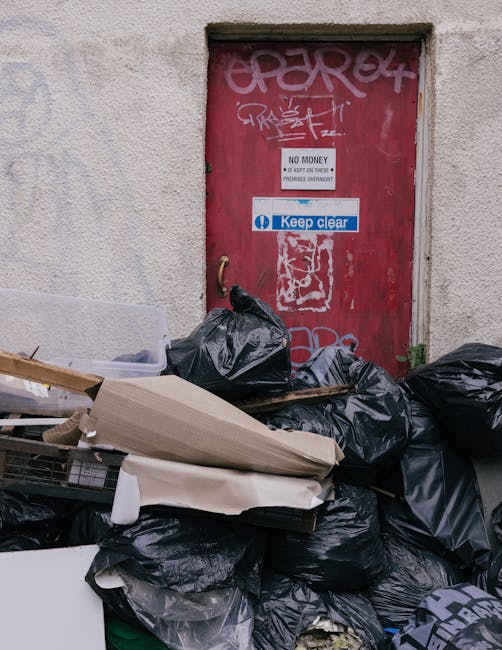
Do you need a permit for waste removal in Brixton? Lambeth guide
If you are arranging a clear-out in Brixton, one of the first questions is usually the practical one: do you need a permit for waste removal in Brixton? The short answer is that it depends on where the waste is going, how it is being collected, and whether the work uses the public highway. In Lambeth, that can mean anything from a simple curbside pickup to a more formal setup where a vehicle, skip, or loading arrangement affects the street.
That's the bit people often miss. Waste removal is not just about getting rid of unwanted items. It is also about access, safety, council rules, and making sure you do not accidentally create a problem for neighbours or your own timetable. This guide walks through the essentials in plain English, so you can decide what applies to your job in Brixton without the guesswork.
We will look at when permits are typically needed, when they are not, how the process usually works in practice, and what to check before booking a collection. You will also find a checklist, a comparison table, and a few common mistakes that trip people up more often than they should. Truth be told, most issues are avoidable once you know what to ask.
Table of Contents
- Why permit rules matter in Brixton
- How permit requirements usually work
- Key benefits and practical advantages
- Who this is for and when it makes sense
- Step-by-step guidance
- Expert tips for better results
- Common mistakes to avoid
- Tools, resources and recommendations
- Law, compliance, standards, or best practice
- Options, methods, or comparison table
- Case study or real-world example
- Practical checklist
- Conclusion
- Frequently Asked Questions
Why Do you need a permit for waste removal in Brixton? Lambeth guide Matters
In Brixton, the permit question matters because waste removal often takes place in tight urban streets, shared forecourts, and areas where parking is already stretched. If a collection vehicle needs to stop on a public road, or a skip has to be placed on the highway, permissions may come into play. That is not red tape for the sake of it; it is about keeping traffic moving, protecting pedestrians, and reducing avoidable disruption.
For residents, landlords, tradespeople, and business owners, the biggest risk is assuming the collection will be straightforward when the location says otherwise. A job that looks simple from inside the property can become complicated the moment the vehicle cannot park on private land. And in Brixton, that happens quite a lot.
There is also a cost angle. A permit issue can delay the removal, add admin, or create extra charges if the collection has to be rescheduled. Nobody wants to be standing by the front door with bags, furniture, or builders' waste on a wet Tuesday morning, waiting for a solution that should have been planned the week before.
Key takeaway: if the waste is being taken from private property directly to a vehicle parked on private land, a permit may not be needed. If the collection affects a public road, footway, or shared highway space, permit requirements become much more likely.
How Do you need a permit for waste removal in Brixton? Lambeth guide Works
The practical rule is simple: permits are usually tied to where the work happens, not just what is being removed. A standard waste removal job from a house, flat, office, or garden can often be completed without any permit if the truck can load from private property or another permitted space. But once a vehicle, skip, or loading arrangement uses the public highway, local rules may apply.
In day-to-day terms, that means the following scenarios often trigger permit checks:
- a skip placed on the road outside a property
- a collection lorry stopping on a restricted street or loading bay
- temporary placement of waste on a pavement or verge
- traffic management needs for larger clearances or building waste
What people often call a "waste removal permit" may actually be several different things. There can be skip permits, parking permissions, loading exemptions, or highway-related approvals depending on the setup. That is why it pays to describe the job clearly before anyone turns up with a truck and a stopwatch.
In a Brixton flat clearance, for example, the lift, stairwell, and parking arrangement matter just as much as the items themselves. A sofa collection from a second-floor flat on a busy road can be perfectly manageable, but the collection plan needs to match the street conditions. If not, the whole thing can get awkward fast.
For larger jobs, especially where you are clearing out mixed items or heavy materials, a service provider will usually ask about access, vehicle parking, and the amount of waste before confirming the method. If you are already comparing options, pages such as waste removal and builders waste clearance can help you think through the different job types and what they involve.
Key Benefits and Practical Advantages
Getting the permit question right early has a few very real benefits. None of them are glamorous, but they save time, money, and hassle. Which, let's face it, is the whole point.
- Smoother collection day: fewer delays, fewer last-minute changes, and a clearer plan for access.
- Lower risk of disruption: no surprise objections from neighbours, parking officers, or building managers.
- Better budgeting: you can separate collection costs from any permit or access-related costs.
- Safer operation: items are less likely to be left in awkward places while someone figures out where the vehicle can stop.
- Better for busy streets: Brixton roads can be active and narrow; planning ahead makes a real difference.
There is also a confidence benefit. People tend to feel much calmer once the access plan is clear. A clear-out already comes with enough decisions: keep, donate, sell, recycle, dispose. You do not need a parking drama on top of that.
If the job involves furniture, a flat, a loft, or a full household sort-out, it can help to look at related services such as house clearance, flat clearance, and loft clearance. Those pages can also give you a sense of what kinds of access issues are commonly expected.
Who This Is For and When It Makes Sense
This guide is useful if you are a homeowner, tenant, landlord, managing agent, small business owner, or contractor working in Brixton or nearby parts of Lambeth. The permit question comes up in all sorts of situations, not only major refurbishments.
Typical people who need to think about it include:
- Flat owners and tenants clearing bulky items from upper floors
- Landlords arranging end-of-tenancy clearances
- Tradespeople removing rubble, timber, or mixed builders' waste
- Office managers arranging desks, filing, and commercial waste collection
- Homeowners doing a big reset before moving, renovating, or downsizing
It makes sense to check permit needs early when access is limited, parking is tight, or the waste is too bulky to move by hand from a private driveway. It also makes sense if the site sits on a busy high street or a road where stopping is already a bit of a puzzle.
For businesses, the issue can be even more straightforward: if the waste removal is part of a commercial clear-out, the setup may need to be coordinated around trading hours, loading space, and staff access. A dedicated business waste removal arrangement is often the neatest route when there is regular or larger-volume waste to manage.
Step-by-Step Guidance
Here is a sensible way to approach the permit question without overcomplicating it.
- Work out where the vehicle will load. Private driveway, private yard, front garden, communal car park, or public road? This is the first fork in the road.
- List the waste type. Furniture, household junk, green waste, builders' rubble, office equipment, or mixed items. Different waste types can mean different handling needs.
- Check access. Are there stairs, narrow hallways, a locked gate, low bridges, or tight parking restrictions? Small things, but they matter.
- Ask whether the collection will use the highway. If the answer is yes, a permit or parking arrangement may be needed.
- Confirm who is responsible. Sometimes the waste carrier arranges the permit-related steps; sometimes the property owner or organiser must assist.
- Allow time for admin. Don't leave it to the day before. That is a classic mistake, and a very human one, but still a mistake.
- Keep the final plan simple. The more clearly the collection point is described, the easier it is to avoid misunderstandings.
If you are dealing with bulky furniture or an entire room's contents, services like furniture clearance and furniture disposal are worth comparing because they may involve different handling needs, depending on what is being moved and where it sits.
A small real-world example: a Brixton tenant clearing a one-bedroom flat may think "it's just a few bags and a wardrobe." But if the wardrobe is on the third floor, the street is permit-controlled, and the vehicle can't stop directly outside, the plan changes. Not dramatically, but enough to matter.
Expert Tips for Better Results
Most permit-related problems are caused by missing details rather than bad intentions. A few careful checks go a long way.
- Take photos of the access point. A quick shot of the frontage, street, or parking area can help avoid confusion.
- Measure bulky items. It sounds obvious, but sofas, wardrobes, and fridge-freezers can surprise people.
- Separate waste by type if you can. Mixed waste is often harder to plan around than sorted items.
- Tell the provider about restrictions early. Narrow roads, timed bays, school streets, and loading limits all change the plan.
- Ask how the team handles access issues. A good provider will explain the practical route, not just quote a price and vanish.
In our experience, the best jobs are the boring ones. Everything is described properly, the vehicle arrives where it should, and the waste disappears without fanfare. That is the dream, really.
If you want to see how a provider frames its standards, the pages on insurance and safety, health and safety, and recycling and sustainability are useful because they show how responsible waste handling is approached in practice.
Common Mistakes to Avoid
There are a few repeat offenders here. If you avoid these, you are already ahead of the game.
- Assuming no permit is needed just because the waste is small. The size of the pile is only one part of the picture.
- Forgetting about the vehicle's stopping point. The collection can be simple inside the property and still require permissions outside.
- Leaving access details until the last minute. This is the big one. It causes delays more often than people admit.
- Mixing different waste types without warning. Builders' waste, electrical items, and household junk may need different handling.
- Not checking building rules. Some blocks, estates, or managed properties have their own access conditions.
Another subtle mistake is assuming that "the council will sort it" or "the driver will know what to do." Sometimes they will. Sometimes they won't. Best not to gamble on that.
If the job is tied to renovations or site work, builders waste clearance is particularly worth considering because construction waste tends to bring access and compliance questions with it more often than general household items.
Tools, Resources and Recommendations
You do not need a spreadsheet the size of a door to organise this. A few simple tools and documents are usually enough.
- A phone camera: for access photos and item photos.
- A rough item list: useful for estimating the volume and type of waste.
- Measurement tape: handy for large furniture, appliances, or awkward loft items.
- Building notes: if you live in a managed block, keep any access rules or emails to hand.
- Service pages and policy information: useful for understanding process, responsibilities, and what standards to expect.
For more context on service types and how they differ, the pages for home clearance, garage clearance, and garden clearance can help you think through the likely access needs before you book.
If you are comparing how quotes are presented, the pricing and quotes page is a useful reference point. It helps to know whether any access-related or permit-related costs are explained clearly upfront.
Law, Compliance, Standards, or Best Practice
Permit rules sit within the broader framework of local highway control, parking restrictions, waste carrier duties, and general safety practice. That sounds heavy, but the everyday version is fairly straightforward: waste should be moved lawfully, safely, and without causing unnecessary obstruction.
A few common best-practice principles apply across most Brixton waste removals:
- Do not obstruct the public highway without the right checks.
- Use an appropriately insured and competent waste carrier.
- Make sure waste is handled responsibly and disposed of properly.
- Keep access routes clear for residents, pedestrians, and emergency use where relevant.
- Plan for special waste categories separately if needed.
For customers, the safest approach is to ask clear questions and get clear answers. Who arranges the access plan? Is the vehicle stopping on private land? Is a permit likely? What happens if the street is not suitable on the day?
That kind of practical checking matters more than fancy wording. And if a provider's answers are vague, that is useful information too.
It can also help to review the company's published standards and policies, such as terms and conditions, payment and security, and about us, especially if you want to understand how the business operates before you commit.
Options, Methods, or Comparison Table
Not every waste removal job in Brixton should be handled the same way. The right method depends on access, quantity, waste type, and whether the highway is involved.
| Method | Best for | Permit risk | Notes |
|---|---|---|---|
| Direct collection from private land | Most house, flat, and office clearances where a vehicle can stop on private property | Low | Usually the simplest option if access is good |
| Roadside loading or highway stop | Properties without driveways or usable private loading space | Medium to high | Often needs extra checks because of parking and street controls |
| Skip-based clearance | Longer projects, refurbishments, or ongoing waste accumulation | Medium to high | Skip placement can trigger permit issues if it sits on the road |
| Managed commercial clearance | Shops, offices, and business premises | Varies | Often needs coordination around trading hours and loading access |
In practice, the best choice is usually the one that keeps waste moving efficiently without making the street situation more complicated than it needs to be. Simple wins.
Case Study or Real-World Example
A typical Brixton scenario might look like this: a family is clearing a flat after a long tenancy. There are a few pieces of furniture, some bags of mixed household waste, and an old desk that no one wants to carry any longer than necessary. At first glance, it sounds like a quick job.
Then the details arrive. The flat is on an upper floor, the road is narrow, and the nearest legal stopping point is a short walk away. The building entrance is shared, the lift is small, and the neighbours are protective of the hallway space. Nothing dramatic, just one of those London clear-outs where every small detail suddenly matters.
The sensible approach would be to confirm where the vehicle can stop, whether the stop is on private or public land, and whether any permit or parking arrangement is needed before collection day. With that in place, the team can plan the move properly, avoid holding up the street, and keep the job moving without stress.
That is the real lesson here: the permit question is rarely about bureaucracy alone. It is about making the job workable.
Practical Checklist
Before booking waste removal in Brixton, run through this quick checklist.
- Have I confirmed where the vehicle will load?
- Is any part of the collection using a public road, pavement, or shared highway space?
- Do I know the type and amount of waste?
- Are there stairs, lifts, narrow hallways, or access barriers?
- Have I checked whether my building has its own access rules?
- Have I asked who deals with permits or parking arrangements if needed?
- Do I know whether the job is likely to be a household, commercial, or builders' clearance?
- Have I looked at pricing, safety, and disposal standards?
- Are any bulky items measured or photographed?
- Am I allowing enough time for admin before collection day?
If you can tick most of those off, you are in good shape. Not perfect maybe, but very good. And that is enough for a smooth removal in most cases.
Get a free quote today and see how much you can save.
Conclusion
So, do you need a permit for waste removal in Brixton? Sometimes yes, sometimes no. The deciding factor is usually access, location, and whether the collection affects the public highway in Lambeth. If the waste can be loaded from private land without causing obstruction, the process is often straightforward. If a road, pavement, or controlled parking space is involved, extra checks are wise.
The best way to avoid headaches is to plan early, describe the access clearly, and choose the method that fits the property rather than forcing the property to fit the method. That little bit of care saves a lot of hassle later on. And honestly, it's one of those jobs where a calm start makes all the difference.
In Brixton, where streets can be busy and space is precious, a well-planned clearance is worth its weight in gold. Keep it simple, keep it clear, and the rest tends to fall into place.
Frequently Asked Questions
Do you always need a permit for waste removal in Brixton?
No. A permit is not always needed. If waste is collected entirely from private land with no highway use, you may not need one. The question usually turns on access and street use, not just the amount of waste.
What counts as using the public highway?
Using the public highway generally means stopping, loading, or placing waste in a public road, pavement, or other council-controlled street space. If the vehicle cannot remain wholly on private land, permit checks may be needed.
Is a skip permit the same as a waste removal permit?
Not exactly. A skip permit is usually tied to placing a skip on public land. Waste removal may involve different access or parking issues. People often use the terms loosely, but the underlying permissions can differ.
Who usually arranges the permit?
That depends on the setup and the provider. In some cases the waste company handles the access planning; in others the customer or property manager needs to help. It is best to confirm this before booking.
Do Brixton flats cause more permit issues than houses?
Often, yes. Flats can involve shared entrances, limited parking, narrow streets, and less private loading space. That does not mean the job is difficult, just that the access plan matters more.
Can a waste removal team collect from a narrow street without a permit?
Sometimes they can, sometimes not. It depends on whether the vehicle can park legally and safely, how long loading will take, and whether any local restrictions apply. Narrow streets need a closer look than people expect.
What happens if I forget to check permit requirements?
You may face delays, rescheduling, or extra costs. In some cases the collection may not proceed if the vehicle cannot stop legally or safely. That is why the permit question should be checked early.
Are builders' waste jobs more likely to need permit checks?
Yes, they often are. Builders' waste can involve heavier volumes, larger vehicles, or skip-style arrangements. That is why jobs involving construction debris should be planned carefully from the start.
Does business waste removal work differently from domestic clearance?
Usually it does. Business waste removal may need coordination around trading hours, access restrictions, loading bays, and site rules. The waste itself may also be more varied, so planning matters even more.
How do I reduce the chance of permit problems?
Provide clear access details, confirm where the vehicle will stop, measure bulky items, and ask whether the job uses public space at any point. Small bits of preparation save a lot of trouble.
Is it worth paying a provider who understands local access issues?
Yes. Local awareness helps because Brixton has a mix of residential streets, flats, and busy roads. A provider who understands access pressure is more likely to plan the collection properly and keep the job moving smoothly.
What should I check before accepting a quote?
Check what is included, how access is handled, whether permit-related issues are discussed clearly, and whether disposal standards are explained. If the quote feels vague, ask for more detail before you agree.